Website Wireframing Services That Give Your Project a Clear Blueprint
Before a single colour or font is chosen, I map out exactly how your website should be structured — so the design phase starts from a plan, not a guess.
Why Skipping Wireframes Costs You Later
It’s tempting to jump straight into visual design — colours and fonts are exciting, structure isn’t. But most of the expensive changes on a website project don’t come from the wrong colour palette. They come from discovering, halfway through development, that the navigation doesn’t make sense, that a key page is missing, or that the homepage is trying to do five jobs at once and doing none of them well.
Wireframing solves that before it becomes a costly problem. It’s a low-fidelity, black-and-white layout of every page — no colours, no final copy, no distractions — built purely to answer one question: does this structure actually work for the people using it? Get that right first, and the visual design phase moves faster because there’s nothing left to second-guess about layout or flow.
Why Choose Me for Website Wireframing
I treat wireframing as a planning exercise, not a formality to rush through before the “real” design work. Every project starts with a proper look at your content, your goals, and what your users are actually trying to do on each page, because a wireframe built without that context just moves the guessing to a slightly later stage.
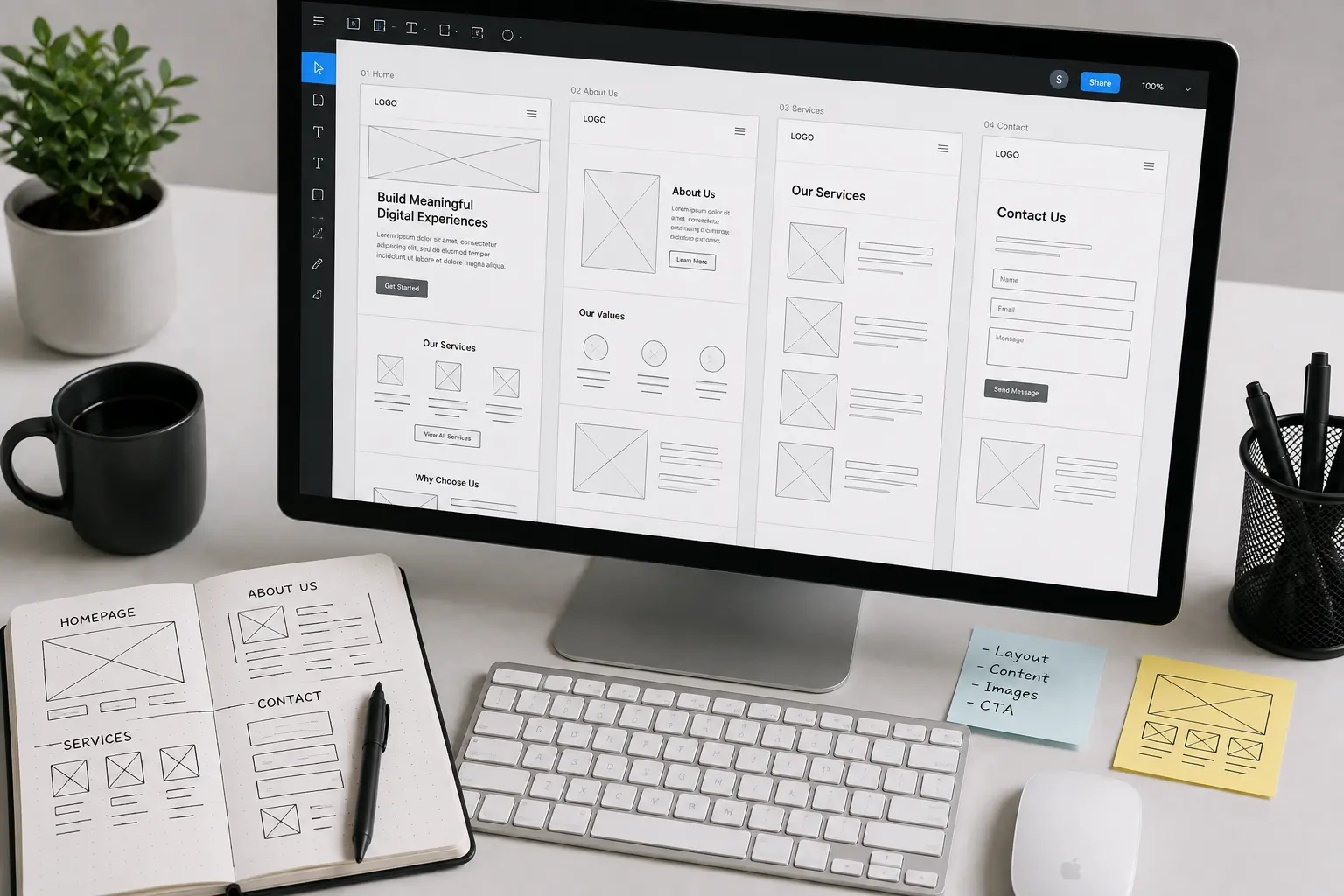
Wireframes are built in Figma, so you can review the structure, leave comments, and request changes before anything is designed visually. This also means the wireframe transitions smoothly into the design phase — nothing needs to be rebuilt from scratch, since the structure is already sitting in the same file the UI design will be built on top of.
Full control, built around you
What's Included
Content & Goals Audit
A review of what each page needs to include and achieve, based on your business and user goals.
Full Sitemap
A clear map of every page and how they connect, so navigation is planned before it's designed.
Low-Fidelity Page Wireframes
Black-and-white layouts for every key page, focused purely on structure and hierarchy.
Mobile & Desktop Structure
Wireframes account for how layout adapts across devices, not just one screen size.
Figma-Based Review
Wireframes shared directly in Figma so you can comment and request changes easily.
Smooth Handoff to Design
Approved wireframes transition directly into the visual design phase, with nothing rebuilt from scratch.
Ready to Start Your Project?
Tell me what you need and I'll come back within 24 hours with honest advice and a clear quote.
Frequently Asked Questions About Website Wireframing
A wireframe is a low-fidelity, black-and-white layout of a webpage that shows structure, content hierarchy, and functionality — without colours, fonts, or final visual design.
Having a visual idea isn’t the same as having a tested structure. Wireframing checks that the layout actually works for your users and goals before time is spent on visual polish that might need to change.
Yes. Every wireframing project starts with a sitemap that maps out all pages and how they connect, before individual pages are wireframed.
Not usually — wireframing typically saves time overall, since it catches structural issues early instead of during development, when changes are far more expensive.
Yes. I can audit your current site’s structure and content, then wireframe an improved version that addresses where users are currently getting stuck.
The wireframes are yours to take to any designer or developer. Many clients continue with me into the UI design phase since the handoff is seamless, but it’s entirely optional.
Let's Map Out Your Website Before We Design It
A solid structure makes every decision after it easier — for you, for your developers, and for the people using your site. Tell me about your project and I'll come back within 24 hours with honest advice and a clear quote.